The client
Where every sentence is a regulatory artifact
A leading global payments technology company operating across the APEC region. Its marketing teams write copy that is simultaneously brand communication and regulated financial promotion.
And they write it for markets that share neither a language, a channel mix, nor a regulator.
The challenge
Speed and compliance pulling in opposite directions
The teams needed to scale campaign copy across many languages and channels while holding regulatory compliance and brand consistency — two requirements that usually trade against throughput.
The surface area
Underneath that: maintaining speed, security and tone of voice across distributed teams, and reducing reliance on manual editing and translation — which was the rate limiter on everything else.
Constraints
What we had to design around
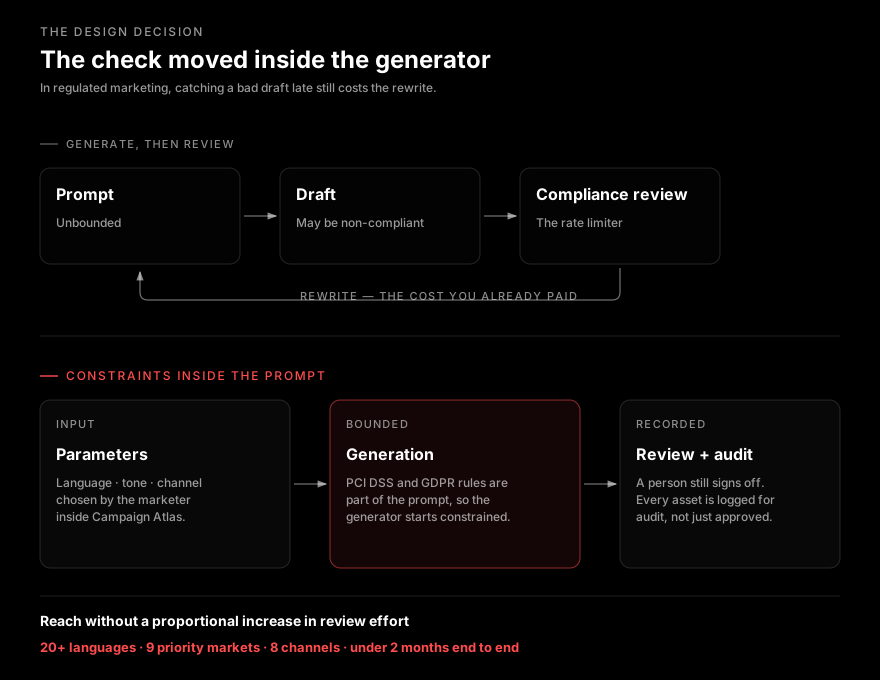
- ComplianceIn regulated financial marketing, generating non-compliant copy and catching it later still creates risk and still costs the rewrite. The constraint had to sit inside generation.
- AuditEvery generated asset needed a trail — what was produced, from what, reviewed by whom.
- AdoptionMarketing managers already worked inside the Campaign Atlas portal. A separate tool would not have been used, however good it was.
- ResidencyFinancial services deployment meant an isolated, compliant environment rather than a general-purpose cloud footprint.
- VoiceTranslation alone flattens brand voice. The output had to be written in each language, not translated into it.
Our approach
Put the constraint inside the generator
The conventional arrangement is: generate, then review for compliance. That arrangement has a specific failure mode in a regulated context. A non-compliant draft still gets written, still has to be caught, and still costs the rewrite — so the reviewer becomes the bottleneck the whole project was meant to remove.
So we did two things. We moved the regulatory checks into the model prompts, bounding the generator before it writes. And we built the constructor inside Campaign Atlas, the portal the teams already worked in, because a compliance tool nobody opens enforces nothing.
The solution
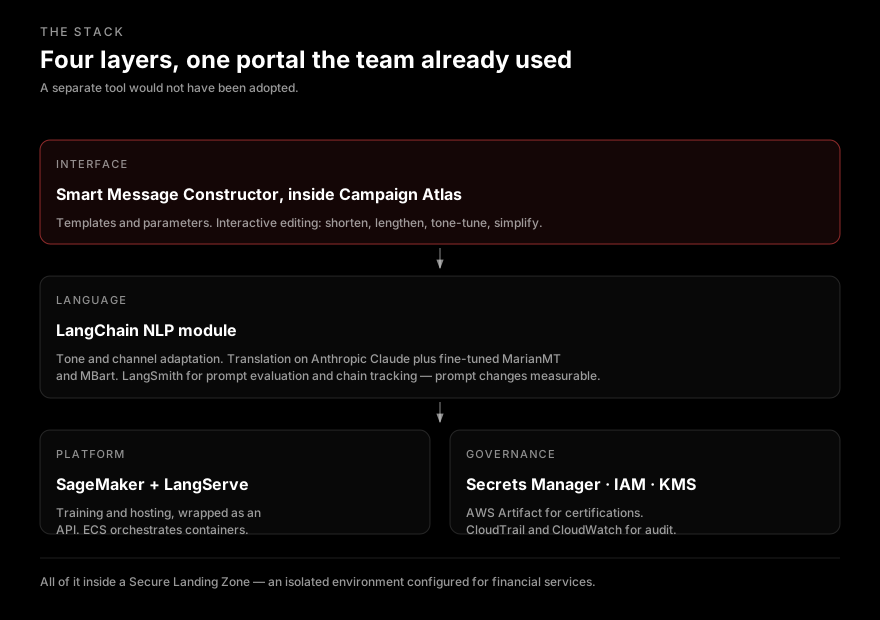
Five layers, and one portal the team already used
- Smart Message Constructor — Predefined templates and custom parameters, inside the portal the teams already used. Language, tone and channel steer the output; editing is interactive — shorten, lengthen, tune tone, adjust emoji use, simplify.
- Embedded compliance — Regulatory checks live inside the model prompts, aligning output with PCI DSS and GDPR requirements. Post-generation review workflows and logging provide auditability on every asset.
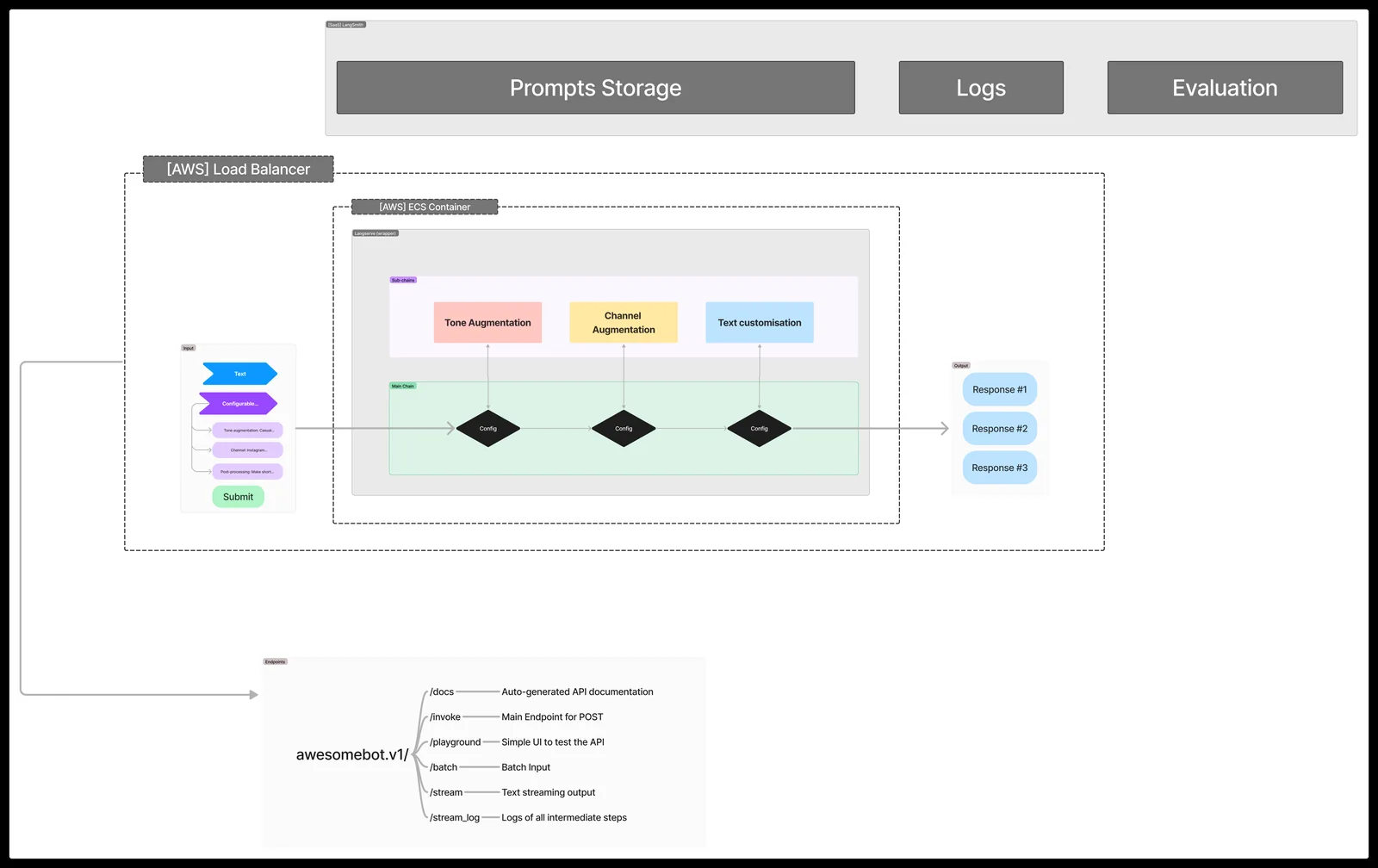
- Language layer — A LangChain NLP module handles tone and channel adaptation. Translation runs Anthropic Claude alongside fine-tuned MarianMT and MBart. LangSmith supplies prompt evaluation and chain tracking, so prompt changes are measurable rather than anecdotal.
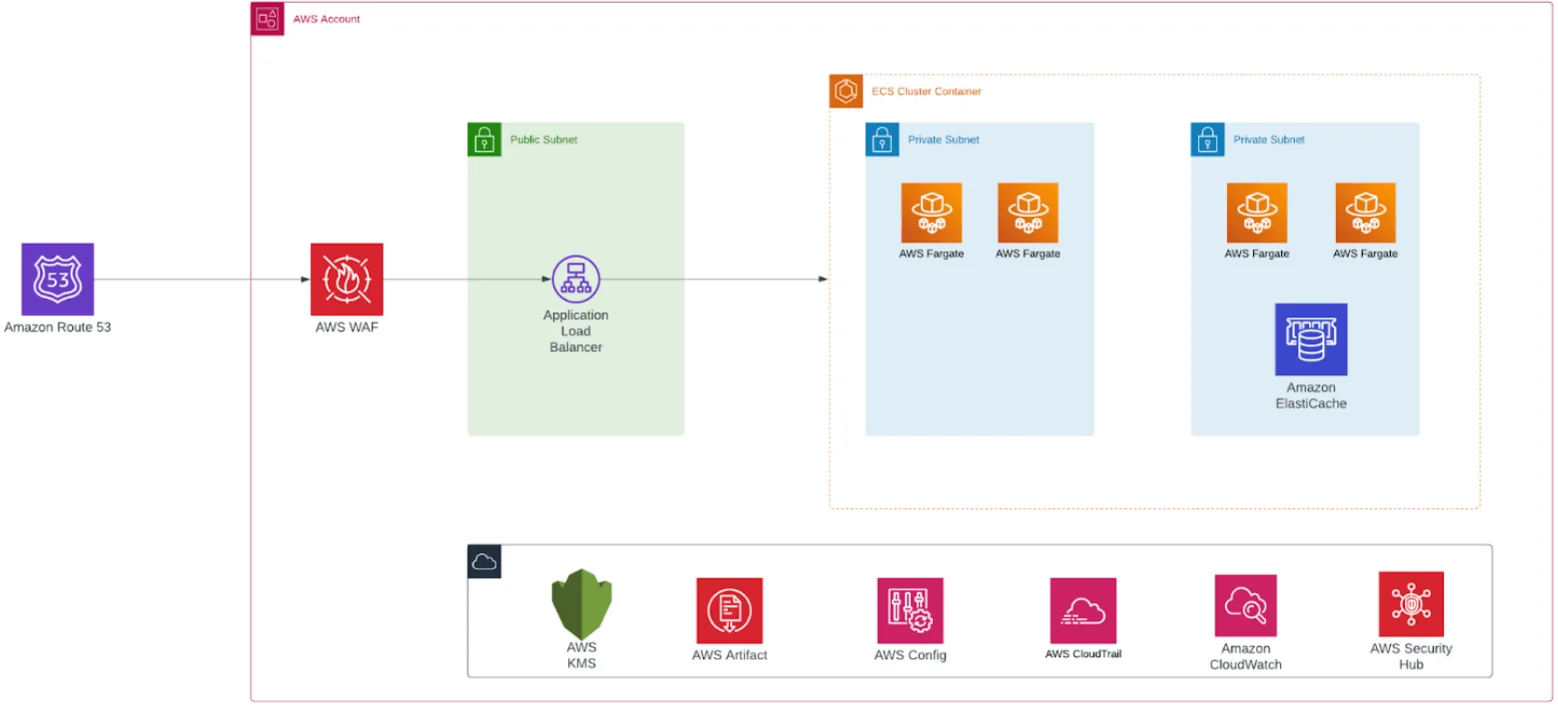
- Platform — Amazon SageMaker for training and deployment, LangServe wrapping it as an API for internal systems, AWS ECS orchestrating containers.
- Governance — Secrets Manager, IAM and KMS for credentials and permissions. AWS Artifact for compliance certifications. CloudTrail and CloudWatch for logging, monitoring and audit — all inside a Secure Landing Zone isolated for financial services.
Responsible by design
Four properties of a generator you can put in front of a regulator
Constrain
The regulatory rules are part of the generation contract.
PCI DSS and GDPR requirements sit inside the prompt, so the generator starts bounded rather than being corrected afterwards.
Review
A person still signs off on every asset.
Compliance by construction reduces what reaches review; it does not remove the reviewer.
Log
Every generation is recorded, not just every approval.
An audit trail that only contains approved output cannot answer what was rejected and why.
Isolate
The whole thing runs in a landing zone built for the sector.
Secrets, permissions, certifications and audit logging configured for financial services rather than retrofitted.
The second one matters more than it looks. Compliance by construction is not a claim that the model is trustworthy — it is a claim that the volume reaching human review is small enough for human review to stay meaningful. The reviewer did not go away.
Results
Reach, without a proportional review cost
- 20+ languages, 9 priority markets, 8 channels, from one constructor with per-market customisation of tone and channel.
- Deployed end to end in under two months, including the secure landing zone, SageMaker hosting and the compliance tooling.
- Compliance enforced by construction, with post-generation review workflows and logging for auditability on every asset produced.
Time-to-market for multilingual campaigns fell, brand-consistent generation became possible at scale, and global compliance with data and content regulation was enforced by construction rather than by review.
Beyond the numbers
What else changed
The teams stopped spending their days on tactical copywriting and localisation management. That work did not get faster so much as it stopped being theirs.
Which moved the marketing function toward creative strategy — the part of the job that was being crowded out by the part a constructor can do.
Worth being straight about what the numbers above are: they describe scope and speed of delivery — languages, markets, channels, timeline — rather than a measured before-and-after on campaign turnaround. The source engagement reported the time-to-market improvement qualitatively, and we have not put a figure on it here.
If compliance review is the bottleneck in your content pipeline
The question is whether the constraint can move upstream into generation — which is answerable from your existing rulebook, before any build.